MeRT


A woman seated cross-legged on a mountain top watching the sunrise

What’s the process?

There are only 4 simple stages in the MeRT℠ process.

The MeRT℠ Process

A customized & targeted approach to Neuromodulation

No two brains are alike. And no two treatments should be either.

MeRT begins by using qEEG (quantitative EEG) to locate the brain regions where each patient's communication is impaired.

Based on those identified regions, stimulation location and intensity are designed individually and applied gently using FDA-cleared equipment.

Non-invasive, painless, and drug-free — so patients can continue their daily life alongside treatment.

↓ See the detailed 4-step process below.

MeRT is an individualized adjunctive treatment, applied only with medical staff evaluation and the informed consent of the patient or guardian. We do not guarantee a cure for any specific condition.


About MeRT℠
Icon of two hands holding a heart

Non-invasive

MeRT is a painless and non-invasive treatment. Most people find MeRT sessions very comfortable.

Icon of an electronic wand with angel wings

FDA Cleared Equipment

We use only FDA-cleared equipment. Our clinical team applies this equipment in an off-label clinical setting.

Icon of a capsule pill and a round pill overlapping

Drug Free

MeRT uses no medication. It uses electromagnetic pulses (EMPs) to help recalibrate brain activity.

MeRT Targeted Treatments

Personalized brain wave therapy technology

Magnetic e-Resonance Therapy (MeRT) begins by identifying the communication challenges unique to each patient's brain.

From there, those areas are addressed through a personalized, carefully designed treatment to support functional improvement.

Illustration of four brains, each receiving electromagnetic stimulation at top-left, top-right, bottom-left, and bottom-right
A vertical gradient bar fading from soft black at the top to transparent at the bottom, symbolizing the flow between sections

Step 1

Record EEG

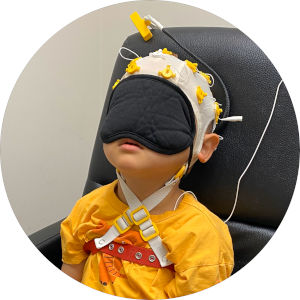
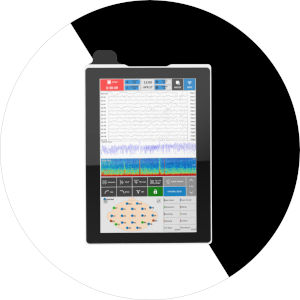
With the patient's eyes closed, a quantitative EEG (q-EEG) and EKG are performed to measure brainwave frequencies, heart rate, and the coordination between brain and heart. Our scientific and clinical team carefully analyzes these results to better understand the state of your brain.

A child seated wearing a blindfold and an EEG cap, having brainwaves and EKG measured
A monitor showing measured brainwaves recorded as zigzag lines

Step 2

EEG Analysis & Review

We use a patented approach combined with neurophysiological data to develop a personalized treatment plan that supports healthy brain communication. All MeRT treatment regions are reviewed and approved by specialists including neurosurgeons.

Step 3

Treatment

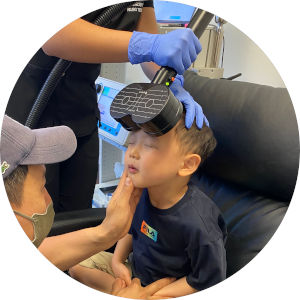
While the patient sits comfortably, a trained technician places the magnetic coil over a specific area of the head. The coil delivers the optimized treatment protocol designed for that patient to the targeted brain region. Stimulation is applied for 6–8 seconds per minute. A typical session is about 45 minutes, of which roughly 30 minutes consists of actual protocol stimulation.

A child receiving MeRT treatment seated with the device on their head
A clinician pointing at and analyzing data on a laptop screen

Step 4

Progress Evaluation

To monitor progress and adjust the treatment protocol when needed, a fresh q-EEG and EKG are measured and recorded every 10 sessions. This ensures we always provide the most optimal protocol matched to the patient's current neurological state. A typical MeRT program runs Monday to Friday, averaging 4–6 weeks total, unless circumstances dictate otherwise.

Frequently Asked Questions

What happens on the first visit?

Your first visit begins with a consultation with our medical team, followed by qEEG (quantitative EEG) and EKG measurements. Treatment suitability is evaluated based on those results.

How is the qEEG test performed?

Soft sensors are placed on the scalp to record brainwaves — a non-invasive, painless test that typically takes around 30 minutes.

How long is a single treatment session?

A session typically runs about 30–60 minutes — actual stimulation is brief, with the rest covering preparation and observation time.

How many visits per week are needed?

It varies by treatment plan, but typically around 5 visits per week over a 4–6 week period. The exact schedule is determined by the medical team.

Can family members accompany the patient?

Yes. Especially for pediatric patients, treatment is conducted with the accompaniment of a guardian and their informed consent.

Is suitability for treatment confirmed at the first evaluation?

Yes. Suitability is determined from qEEG/EKG results and the medical team's evaluation. If MeRT is not deemed appropriate, an alternative approach may be recommended.