Developmental Disorder
Developmental disorder is a broad term covering difficulties across brain development, learning, motor function, and language. Autism is one form within this category.








Developmental Disorder
Developmental disorder is a broad term covering difficulties across brain development, learning, motor function, and language. Autism is one form within this category.
Autism Spectrum
A neurodevelopmental condition presenting diverse characteristics across social interaction, communication, cognition, and behavior. Because the range is broad, it is called the Autism Spectrum Disorder (ASD).
Conditions formerly classified separately — such as Asperger's syndrome — are now included within the autism spectrum.
Causes of Autism
The exact cause is not yet known. Current research suggests a complex interplay of genetic, environmental, hormonal, immunological, and neurobiological factors.
Since no established curative treatment exists, the priority is to try multiple approaches and find the one that best fits each individual child.
Diagnosis of Autism
Differences from typical development typically begin to emerge around 12 months. Common early signs include delayed speech, lack of eye contact, no response to name calling, and repetitive behaviors.
A clinical diagnosis is then made through standardized assessments at a medical institution.
Treatment Options for Autism
Early detection and early intervention matter. Around age 4 is a critical window for cognitive development, and outcomes can be meaningfully shaped by early, well-matched care.
Behavioral Therapy
Helps establish situation-appropriate behavior through repetitive learning. Sometimes criticized as mechanical, but it remains a widely useful approach.
Speech Therapy
Often paired with behavioral therapy. Builds foundational language and social interaction skills.
Medication
Plays an important role in managing hyperactivity, sleep, and emotional stability. Works synergistically when used alongside MeRT.
TMS
Stimulates surface cortical neurons with magnetic fields. Limited to surface-level stimulation.
MeRT
An MRI-informed magnetic resonance technology that can reach deeper neural regions. Meaningful changes have been observed in social interaction, communication, behavior, and cognitive function in autism patients.
MeRT for Autism
Step 1 · Diagnose
Diagnose
We measure qEEG (quantitative EEG) and EKG (electrocardiogram). Our scientific and clinical team analyzes the results in depth to identify brain function patterns and confirm safety.
Step 2 · Personalize
Personalize
Based on the analysis, stimulation location, intensity, and frequency are designed individually. This is highly personalized therapy based on rTMS (repetitive Transcranial Magnetic Stimulation).
Step 3 · Treat
Treat
FDA-cleared equipment gently stimulates targeted brain regions with magnetic waves. Non-invasive and compatible with existing medication.
Step 4 · Improve
Improve
Meaningful changes have been observed in verbal expression, eye contact, and social connection among autism patients receiving MeRT.
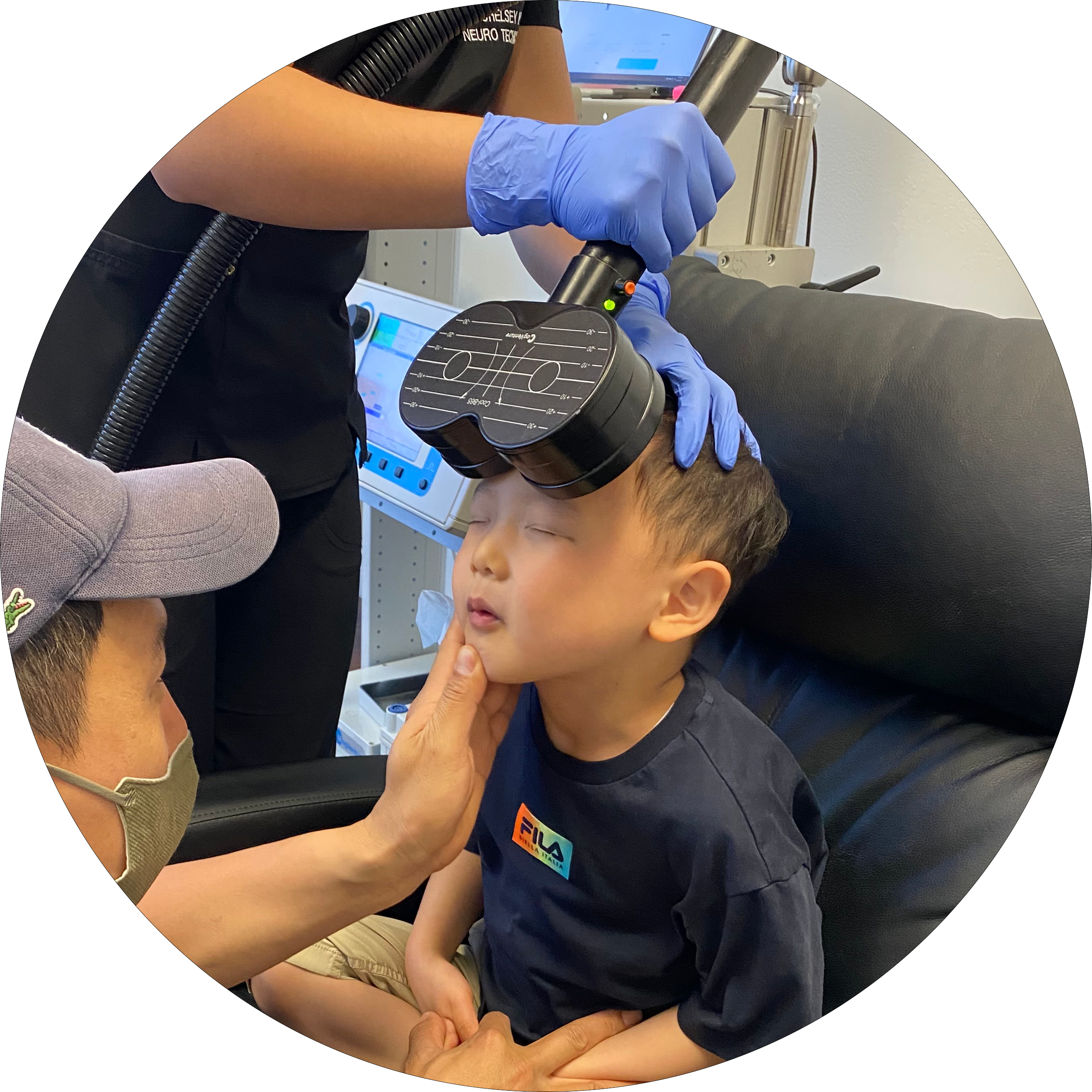
"We tried every possible treatment to help our child. Nothing worked — until we discovered BTC by chance. MeRT changed everything for our family."
BTC Patient

In a double-blind randomized controlled trial, 66% of individuals with verbal and non-verbal communication challenges experienced improvement.

In the same study, 70% of individuals with difficulty maintaining eye contact showed improvement in eye contact.
The MeRT℠ Approach
Symptoms may look similar, but the underlying causes are inevitably different — because no two brains are alike.
Treatment begins by identifying brain regions where information communication is impaired. Those areas are then gently and individually stimulated to help restore function.
MeRT is an individualized adjunctive treatment, applied only with medical staff evaluation and the informed consent of the patient or guardian. We do not guarantee a cure for any specific condition.
MeRT is a non-invasive magnetic stimulation treatment using FDA-cleared equipment. No anesthesia or drug injection is involved. It is applied only after medical evaluation, and no major adverse events have been reported.
Yes. MeRT is designed as a complement to medication, not a replacement. Existing pharmacological treatments can be continued.
This varies by individual, but changes are typically observed over the 4–6 week course. Progress is reviewed via repeat qEEG measurements by the medical team.
4–6 weeks is generally recommended. The exact plan is determined by the medical team based on qEEG results and individual condition.
Determined by medical evaluation. For Autism Spectrum Disorder, early detection and early treatment initiation are generally recommended.
Yes. MeRT is non-invasive and painless. No anesthesia or recovery time is needed, and patients return to daily activity immediately after sessions.
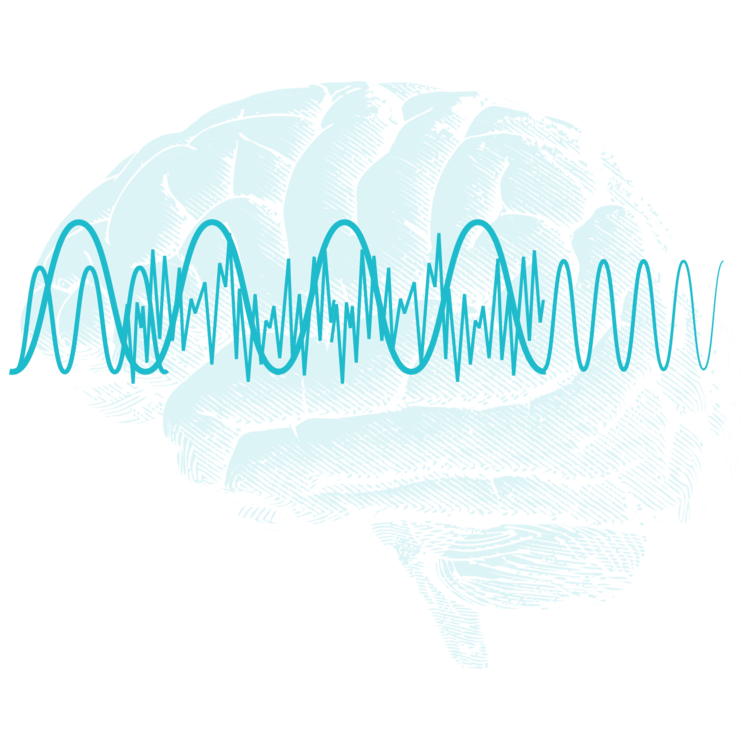
Patients with developmental delay often show characteristic markers across roughly the front three-quarters of the brain. Their behavior is dominated by a mix of slow delta and theta waves with elevated beta — whereas neurotypical patients generally show a single dominant frequency within the alpha band.
By measuring and recording EEG and using that data to create an individualized treatment protocol, functional disruptions can be eased and overall brain coherence improved. This often supports improvements in sleep, social behavior, and the overall quality of life of the child and family.
In a double-blind randomized controlled trial, 66% of individuals with verbal and non-verbal communication challenges experienced improvement.
In the same study, 70% of individuals with difficulty maintaining eye contact showed improvement in eye contact.


Start with a personalized consultation based on a qEEG brainwave assessment. All consultations are confidential.